I just saw NAZA at the New York Film Festival. There were a dozen cops outside the theater checking people’s bags. Protesters were anticipated but there were no protests—just a car with the message “NO PROOF” plastered on its door, circling the block.
Several people spoke briefly before the screening. One of them was Harry Davies, an investigative reporter at the Guardian, which co-produced the film. Harry reminded the audience that investigative reporting is based on information obtained from sources whose anonymity is a vital institution. He also said the Guardian’s investigations department (that is, he and his colleagues) had fact-checked all the assertions made by interviewees in the film and had corroborated all of them. Many of the things recounted in the film had been previously published in the Israeli-Palestinian online magazine +972 (whose journalists I know personally). The film itself was the result of nearly three years of work by this team.
As for the film, I can’t say whether it’s great or not. It is staggering. People talk about the work they do with Tel Aviv in the background: we see people in the windows and imagine other people in other windows sixty kilometers down the coast. The interviewees describe a well-oiled machine for murdering people, not a one-off totally fucked-up incident amidst the war. Many of the film’s critics have overlooked the Israeli army’s use of AI to select its targets for murder. According to their own estimates, the system is now approximately eighty-five percent effective, meaning that a minimum of fifteen percent of its targets had nothing to do with Hamas. Moreover, a target doesn’t equated to a victim, hence the term NAZA itself, which is an acronym for “collateral damage” [in Hebrew]. The [IDF] officers in the film explain that a NAZA value of twenty is the threshold of hesitation. Killing twenty bystanders to take out a single alleged insurgent could be problematic, but any number below twenty is a-okay. And yet the officers recall instances where NAZA values of 500 and 200 were green-lighted. Why such [high] numbers? Because alleged or genuine members of Hamas are killed at night, in residential buildings, along with everyone in their vicinity. The estimate of potential victims can be made quite accurately due to the total system of surveillance [used by the IDF]. They can hack a telephone and use it as a microphone. Do you hear a baby crying in the background? The baby is only a single NAZA.
There are many other harrowing details in the film.
The Israeli secret services will have a tough time identifying the interviewees. We don’t see their faces, and sometimes even their heads are hard to make out; their voices have been altered, and their handwriting has been blurred. Many of the interviews draw and caption on paper what they saw on their [computer] screens. Many of them are involved in combat remotely. One of the interviewees had been in Gaza itself, burning down houses.
There was no ovation [when the screening ended]: no one applauded at all, so the credits rolled down the screen in profound silence. I could hear several people crying, and the person to my left intoned, “Oh Jesus, Jesus.”
Something else that struck me as vital is the extent to which war is no longer waged blindly, the extent to which every decision, every step in this war, and in all contemporary wars, is weighed and documented, and yet people continue to make those decisions nonetheless.
Some of the interviewees describe their role as a technical one, while others speak of the prestige of working in reconnaissance, about their mission, about [being part of] the speartip pointed at the enemy. One person talks about having “fun.” Judging by what they say, nearly none of them feels hatred. Hatred isn’t obligatory for committing murder, nor is ignorance. Remember the parable about the smoke constantly streaming from the crematorium and how “we were looking the other way”? You can’t say that anymore.
The film will soon be viewable on the Guardian’s website. I heartily recommend that everyone see it. Don’t be in a hurry to sound off now [about this post]: you might feel like an idiot only a couple of weeks later. Wait and see the film, and then we’ll talk.
Russia’s Federal Security Service (FSB) is preparing a new case, for high treason, against Ruslan Siddiqi, the Russian-Italian anarchist serving a 29-year sentence for sabotaging a train carrying munitions to the Ukrainian front.
Siddiqi wasconvictedin May last year, and the Military Court of Appealupheldthe sentence on 1 July this year. In 2023 he blew up railway tracks in the Ryazan region, derailing a freight train carrying munitions, and organised a drone attack on the Dyagilevo military airfield.
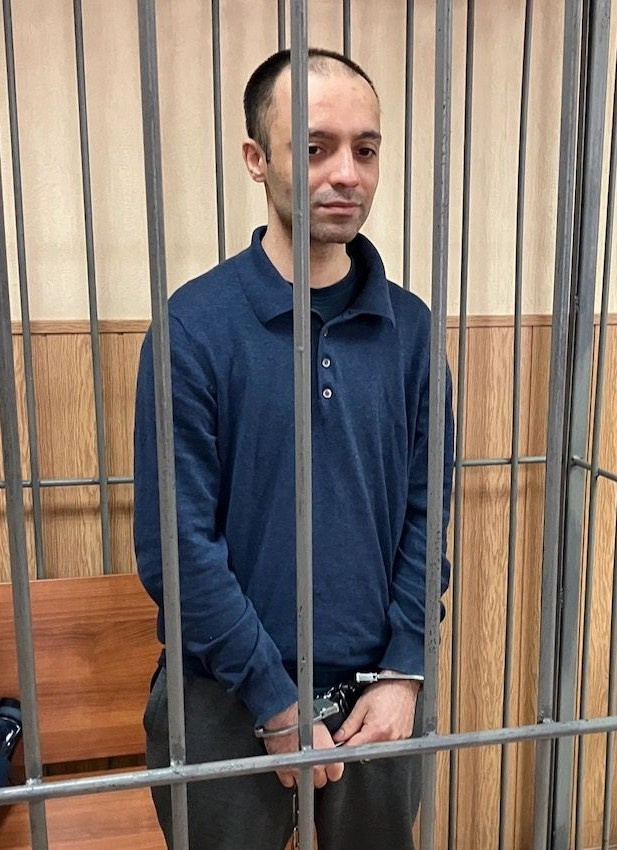
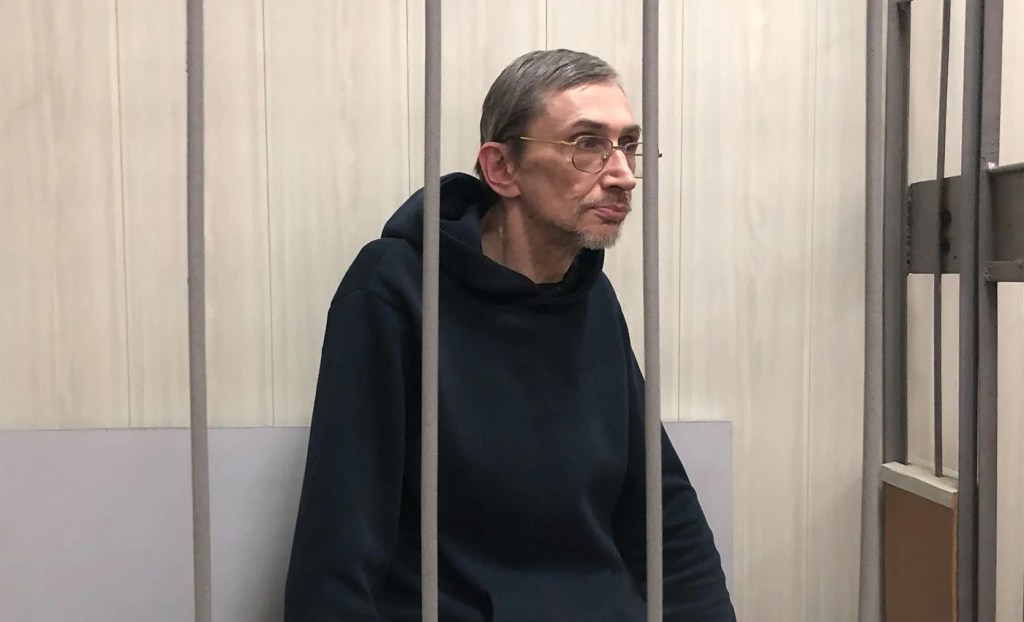
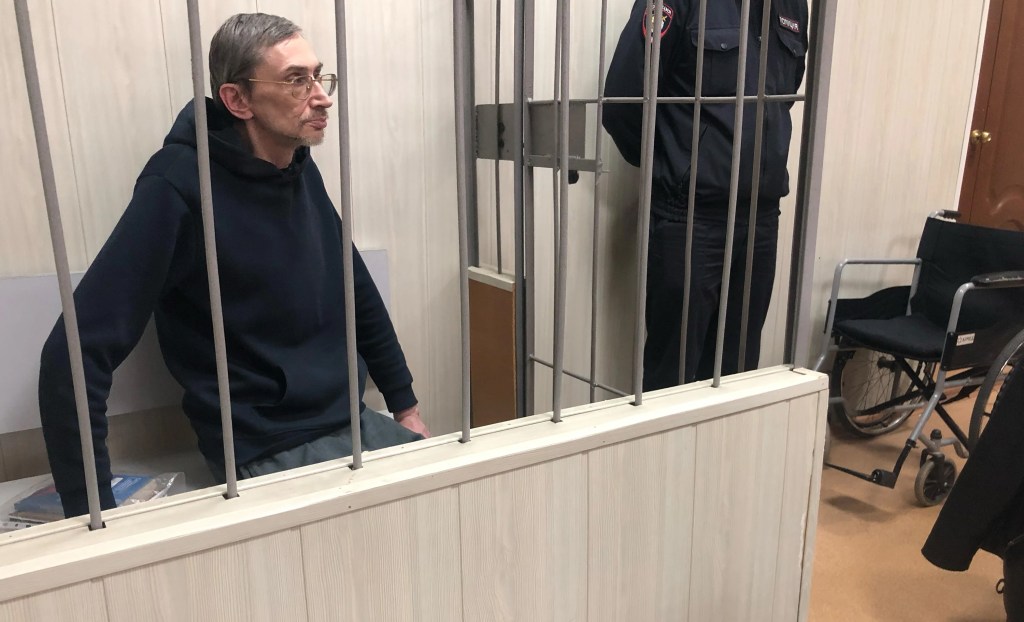
Ruslan Siddiqi in court last year
Siddiqi confessed to these actions and told the court he sees himself as a partisan, opposing Russia’s war on Ukraine. He denied a further charge of preparing another attack. He was tortured extensively during questioning, but the authorities have refused to investigate.
Fires of Freedom, who give legal and other support to Siddiqi,saidthat, although he should have been transferred to prison after conviction, he is being held at a pre-trial detention centre (SIZO) in Ryazan. Transfer has now been delayed because of the new case.
Here isa Facebook postabout the new charges by Ivan Astashin, who campaigns in defence of political prisoners, translated by Giuliano Vivaldi:
“Isn’t that enough for them?” is the first thought that automatically springs to mind upon hearing the news of a new criminal case against anarchist Ruslan Siddiqi, who has already been sentenced to 29 years in prison for two anti-war acts of sabotage and has now also been charged with treason.
And yet for the security forces, everything is much more mundane, has a more practical raison d’etre. The sentence itself plays no role here.
It was the Investigative Committee [a federal agency answerable directly to the Kremlin] who took on the first case against Ruslan. And not just some district department, but the central bureau of the Investigative Committee — or, to be precise, the department for investigating war crimes, genocide, and the rehabilitation of Nazism, which [Investigative Committee chairman Aleksandr] Bastrykin established in 2022.
At the same time, under the Code of Criminal Procedure, only the Federal Security Service (FSB) can investigate cases of high treason. So if the Investigative Committee had “discovered” signs of high treason in Ruslan’s actions, it would have had to hand the case over to the security services.
Naturally, the Investigative Committee did not want to give such a juicy case to anyone else, so they “didn’t discover” high treason, but only terrorism, terrorism, and once again terrorism … which the Investigative Committee has the right to investigate on an equal footing with the FSB.
At the same time, the version that Ruslan was cooperating with Ukrainian military intelligence, which has now become the basis of the treason charge, was always foregrounded. Indeed, it was one of the central elements of the prosecution’s case.
The investigation explicitly proceeded on the assumption that Siddiqi coordinated his actions with representatives of Ukraine’s Chief Directorate of Intelligence. It was precisely through this framework that his actions were classified, among other things, as having been committed by an “organised group”.
So the evidence on which the FSB is now building a new treason case was already there in the materials of the first case. But turning this evidence into a separate charge based on the violation of Article 275 [on high treason] would have meant transferring the case to another agency, the FSB.
The central office of the Investigative Committee took on a high-profile case, “investigated” it itself, gathered the “evidence” itself, brought nine (!) criminal charges, and saw the case through to a conviction. There was absolutely no reason for it to hand such a case over to another agency.
Now the Investigative Committee’s work is finished. The verdict has been handed down; the appeal has been heard. And this is where the baton is already passed to the FSB Directorate for the Ryazan region.
For them, it’s a perfect case. The accused is already in custody. The skeleton of the case has been assembled by colleagues from another agency. All that remains is to rewrite the Investigative Committee’s material to fit the structure of the article of the criminal code on treason, and receive a ready-made crime against state security that has already been “solved”.
I have already told a similar story about Aleksander Leleko: he was convicted as a teenager for setting fire to railway relay cabinets, and several years later the FSB began reworking those same events into a new treason case. [Leleko, from the small Siberian town of Sharypovo, was arrested in 2023, then aged 16, and sentenced to six-and-a-half years. In April this year it was reported that he was in prison hospital, and being administered psychtropic drugs, while investigators sought to put together the new case.]
Therefore, the question “Really, is 29 years not enough for them?” hardly makes sense here. It’s not about the sentence, but about the crime-solving rate, which our investigative authorities so badly need to improve. Especially now, when generals are being blown up and shot at home.
This situation illustrates my point very well that a repressive system has rules. It can produce an utterly monstrous result, but internally it still remains a bureaucratic machine with jurisdictional boundaries, departmental interests, reporting requirements, and its own rules.
An all-powerful security official cannot simply take any desirable article of the Criminal Code and put it into his casework. Even when the decision to imprison someone has already been taken, you still have to properly document who exactly is supposed to imprison them and under which article.
Perhaps, in Ruslan’s case, there also exists a more personal motivation on the part of the Ryazan security services officers. They could not find Ruslan after the first action, caught him only three weeks after the second, and subjected him to brutal torture.
But a much more mundane and so perhaps more frightening mechanism is quite enough to explain the emergence of a new case: the agency needed a criminal case of its own; a ready-made defendant was available with a “body of evidence” already sitting on their desk.
For the security agencies, the people involved in these cases are primarily numbers in a report, not human beings.
□ Fires of Freedom, which supports Ruslan, is on Telegram (Russian only). In English, there are reports on Ruslan Siddiqi’s case, and information about how to give support, on the Autonomous Action site e.g. here, here and here. Ivan Astashin was interviewed here.
□ Ruslan Siddiqi’s final statement in court, and letters describing his anti-war action and arrest, are included in the book Voices Against Putin’s War, free to download here. The letters were published by the Russian Reader here.
Far-right activists once again turn up for annual reading of Great Terror victims’ names
The annual Day of Remembrance for the Victims of the Great Terror is taking place in the Sandarmokh forest tract. Among those in attendance are nationalists from the so-called Russian Community (Russkaya Obshchina) and Cossacks. One of the far-right activists, his face covered by a mask, is brandishing a Russian flag, according to our correspondent.
For the most part, the provocateurs are being ignored, and they have not played any music.
“So far, no one has been aggressive,” our correspondent reported.
Journalists from pro-government TV channels 78 and Channel One also turned up for the reading.
A monument to the Jews murdered in the area had been toppled but was later restored to its original location.
What you need to know
In 1937–1938, Sandarmokh was the site of mass executions and burials during Stalin’s Great Terror. The site was discovered by members of the Petersburg and Karelian branches of Memorial in 1997.
Every year on August 5, official memorial ceremonies are held in Sandarmokh to honor the victims.
Last year, far-right extremists also attended the ceremony: they splashed water on those who had come to the memorial event and sang “Katyusha.” The year before last, they tried to drown out the reading of the names by playing military songs over loudspeakers.
The Day of Remembrance for the Victims of the Great Terror is annually held on August 5 in Sandarmokh, [a] forest area in Karelia. Thousands of people killed by Stalin’s NKVD are buried in the area.
This year’s commemoration did not proceed without trouble.
A significant number of people had traveled to the memorial site to pay their respect[s]. Among them were representatives of the Finnish Embassy in Moscow, including Ambassador Marja Liivala.
They were met by militant activists from the ultraright group Russkaya Obshchina (Russian Community).
Many of the militants had their faces covered by balaclavas. They verbally attacked the foreign diplomats, accusing them of being ‘fascists.’
The provocateurs also told the guests at the commemoration that they were ‘collaborators’ and that they should “go to Donbass.”
At one point, several of the militants began to chant the patriotic song “Katyusha.”
The Barents Observer has gotten access to photo and video footage from the event.
The provocations were carefully planned by Russkaya Obshchina and its partners. The extremist group has close links to powerful people in the Putin regime. Lately, it has become more active and visible in the Russian public space, including in north Russian regions like Murmansk.
Representatives of the Finnish Embassy in Moscow, along with diplomats from the other Nordic countries, regularly attend commemoration events like the one in Sandarmokh.
The day before the commemoration event in Sandarmokh, a memorial event for victims of political repression took place at the Krasny Bor memorial cemetery near Petrozavodsk, Republic of Karelia. Activists read out the names of the terror victims. An 80-year-old veteran of the Ministry of Internal Affairs, Tatyana Savinkina, who had been involved in the rehabilitation of the repressed for many years, attended the event, reported SOTAvision. In December 2024, Savinkina was convicted for “discrediting the army.”
Since the start of the full-scale war in Ukraine, Sandarmokh has repeatedly become a site for provocations. In 2022, pro-government activists stuck the symbol of the Russian invasion – the letter Z – on the cars of people who came to the site, placed leaflets with insults directed at the Ukrainian president, and attempted to distribute books by the well-known Karelian Stalinist Alexander Stepanov. In 2024, a group of Cossacks and unknown individuals arrived at the site, hiding their faces under balaclavas. They set up speakers between the pines, from which military songs played. Ukrainians holding a memorial service at their cross of sorrow were shouted at with “Glory to Russia,” and near the Holocaust monument, provocateurs shouted “Jews sponsored Hitler.”
Son of political prisoner Oleg Belousov sentenced to 7 years in prison
The 1st Western District Military Court in St. Petersburg sentenced Daniil Belousov to seven years in prison on multiple counts of “condoning” terrorism,” our correspondent reports. The indictment states that Belousov was an administrator of the project Media Partisans, which was declared a “foreign agent” in March of this year.
The prosecutor had requested a nine-year sentence. Belousov’s case was heard in closed chambers.
Bumaga first learned of Daniil’s arrest in March in a letter from Pavel Sinelnikov, a defendant in the Vesna Case. At the time, Belousov was being held in the Crosses pretrial detention center.
The case stemmed from a message posted in a public chat group called “No to War” (Net voine), Sinelnikov reported. Bumaga located a chat with that name where Belousov had posted photos of a pro-Ukrainian rally, organized by Ukrainian refugees near the [Moldovan] parliament building in Chisinau. The chat is linked to the Media Partisans project.
In April, Ostorozhno, Peterburg reported, citing a source in the FSB, that an administrator of the Media Partisans chat had been detained in Petersburg. According to security officials, the detainee had urged Russians to join the Russian Volunteer Corps and the Free Russia Legion. SOTA clarified that the individual in question was Daniil Belousov.
Daniil Belousov has a disability dating back to childhood: he suffers from a residual organic lesion of the central nervous system. He finds it difficult to secure employment and requires constant care, Oleg Belousov toldBumaga. Oleg Belousov raised his son as a single parent. And yet, according to the website Kino-teatr.ru, Belousov junior has appeared in several Russian films over the past three years.
Oleg Belousov is an amateur archaeologist from Petersburg who in late March 2023 was sentenced to five and a half years in a medium security penal colony under the law prohibiting the dissemination of “fake news” about the Russian army. According to investigators, Belousov senior had called Putin a war criminal and wrote about war crimes in Bucha, Hostomel, and Irpin in a private VKontakte chat group for treasure hunters.
Before his imprisonment, Oleg was unemployed and lived on state benefits, as he has a third-class disability due to an arm injury. In February, the EU identified the judge who sentenced Belousov senior as “culpable of serious human rights violations.”
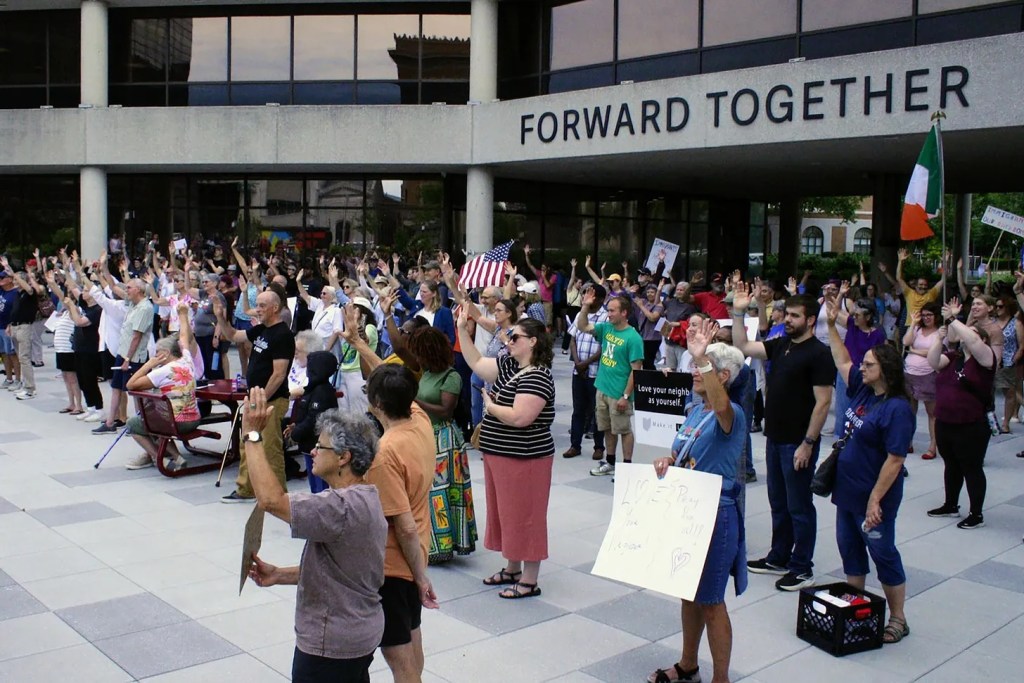
A crowd gathers outside city hall in Springfield, Ohio, to react to the Supreme Court’s decision in Mullin v. Doe. Photo: Jim Swift/The Bulwark
Forward Together, Backward by Order
by Jim Swift
SPRINGFIELD, OHIO—What organizers had hoped would be an evening of celebration was instead an interfaith prayer service. Ministers, immigration lawyers, community organizers, Haitian families, and hundreds of their neighbors gathered in front of Springfield City Hall beneath the city’s motto, “Forward Together,” alternating between English and Creole as they decried the Supreme Court’s decision and prepared for what many fear could become mass deportations.
Thursday morning, after the Supreme Court cleared the way for the Trump administration to end temporary protected status for Haitians, the people who helped revive Springfield, Ohio, were trying to figure out how long they could keep their jobs and their driver’s licenses, and whether they should start preparing for deportation. Pastor Carl Ruby captured the mood: “We had hoped this would become a time of celebration . . . but it has become a time of lament.”
Fleeing gang violence and what has become a de facto civil war, thousands of Haitians have helped reverse decades of decline in Springfield since 2010. They filled factory jobs, opened businesses, started churches, and helped stabilize the city’s population after years of shrinkage. But that growth stopped after JD Vance amplified a pernicious lie about Haitians in Springfield eating dogs and cats.
Now the Trump administration is set on removing many of the very people who helped bring Springfield back.
Yesterday’s 6–3 ruling by the Supreme Court cleared the way for the Trump administration to end TPS, meaning that although litigation may continue, many Haitians here in Ohio and all across America under TPS are subject to deportation immediately.
On a live zoom press conference earlier yesterday held by Springfield G92, a volunteer-led group of churches and faith advocates that focus on immigrant rights and mutual aid, Geoff Pipoly, a lead attorney on the TPS case, Mullin v. Doe, explained that while they’re reviewing what’s left of the case to determine whether any further legal appeals from his plaintiffs were tenable, the situation for Haitians here varies by their status.
Haitians here under TPS could consider filing asylum claims—if they can find an immigration lawyer to help them. The immigration court system is, to put it mildly, a shitshow right now. Donald Trump is purging judges who don’t deport a lot of people, the New York Times reported this week.
The data say the purge is having its desired effect: In Fiscal Year 2025, the denial rate for asylum claims more than doubled—from 14.3 percent to 30.8 percent—while the grant rate fell from 12.0 percent to 9.9 percent, its lowest level since 2017.
Those here under TPS alone are facing a lot: Their state-issued driver’s licenses are set to expire on July 6, as Ohio provided them with temporary extensions due to the uncertainty of their TPS status. Before the stay, Haitians were unable to renew their driver’s licenses because DHS made it clear that Trump wanted to end their protected status. Their expiry in ten days will make driving illegal, not that many are going to be venturing out due to the chance that ICE could stop them and deport them. And, unless they have another legal basis to remain, they won’t have jobs to drive to: the end of TPS will mean the end of their work authorization.
Biassou Pierre, a community organizer from Haiti, told the crowd: assembled in front of city hall, “Today many people call me asking, ‘How will I feed my children if I lose my job? What will happen to my family if I get detained by ICE?’ Unfortunately, we don’t have a good answer.”
But even if one had the money and could find an immigration lawyer with availability to take up their case, that doesn’t mean a quick return to work. “People who have pending asylum applications may be eligible to apply for a work permit after their application has been pending for 180 days,” Katie Kersh, a senior attorney with Advocates for Basic Legal Equality in Dayton, told reporters. “But the administration is trying to extend the required waiting period to one year.”
At the rally last night, Kersh put this avoidable tragedy in these terms: “These individuals followed the law. They followed the law and applied for TPS, and often asylum. The law abandoned them.”
There is some hope in Congress in the form of H.R. 1689, which would extend TPS until the end of the Trump administration. By some small miracle, it passed the House in April on a bipartisan basis, with ten Republicans, including Ohio’s Mike Carey and Mike Turner (who represents Springfield), supporting it. But Haitians here now have to depend on the Senate, and Ohio’s senators are notably silent.
Sens. Moreno, an immigrant himself, and Jon Husted, who is up for election this fall, having been appointed to fill Vance’s seat, do not have a position on the bill. Outgoing Gov. Mike DeWine, who grew up in the area and has done charitable work in Haiti with his wife, has supported extending TPS and called Thursday’s ruling a mistake that was “not in the best interest of the United States nor Ohio.”
This has the potential to become a big campaign issue for both Husted and Vivek Ramaswamy, the controversial Republican candidate for governor. As Jonathan Cohn reported in these pages earlier this week, Haitian immigrants are a bedrock in multiple industries around the country, most notably healthcare.
Former Sen. Sherrod Brown, running against Husted, has been vocal in his support for the Haitian community, calling on both Husted and Moreno to support an extension of TPS for Haiti. Amy Acton, the Democratic nominee for governor, has been more careful in her wording, saying: “Law enforcement should be keeping people safe by going after dangerous criminals, not terrorizing communities.”
Viles Dorsainvil is a Haitian pastor and co-founder of the Haitian Support Center, which has been helping with utility bills, rent assistance, legal services, and transportation for Haitians who have been looking over their shoulder since Trump and Vance propagated heinous lies about them.
“Everything has changed in the community” Dorsainvil told reporters early Thursday, “And the worst thing now is that the employers will terminate workers immediately. . . . It was predictable that our community will be in trouble and that the decision will amplify the humanitarian crisis that we’ve already had here. That’s the reality. So as a center, we’ll continue to do our best, but we don’t know how long we’ll be able to survive.”
What awaits these Haitians in Springfield? Pastor Ruby, who welcomed me into Springfield Central Christian in February to talk and show me the preparations they had made to provide this community sanctuary, said, “We have had to think about issues of civil disobedience. We’ve had to think about the issue of providing sanctuary, and when there’s a conflict between man’s laws and God’s laws, we have an obligation to side with God’s laws.”
The situation in Haiti remains bleak. The State Department doesn’t advise Americans to travel there, as it’s one of the “most dangerous places on earth right now” Ruby says. He recounts a conversation with a young boy, about his life before coming to America: “I was talking with a 12-year-old boy . . . we were talking about farm animals. And he started talking about seeing huge pigs. . . . I said, ‘What were the huge pigs doing?’ And he said, “The huge hog was eating bodies.”
He added: “So that’s what Haitian children have observed. They’ve all been traumatized. This is gonna re-traumatize them. I can’t imagine the fear that they’re experiencing right now. There’s another person in our church . . . the decapitated body of a friend was left in front of his house. That’s what Haiti is like right now, and our justices knew that.”
Dorsainvil, for his part, is appreciative of the support his center has gotten from around the country. “We are grateful for people who’ve been standing in solidarity with us . . . because you understand our struggle . . . We will continue to count on you to stand in solidarity with our community here in Springfield.”
“I am no different from other folks.” he told reporters, “I just have a pending asylum. . . . Everything is in limbo now. I don’t know how that will be.”
Pierre, speaking to an audience beyond those assembled in front of him, pleaded: “We are not just immigration cases or statistics. We are your neighbors, your coworkers, and members of your church.”
“Please don’t forget us.”
You can donate to the Haitian Support Center here and other local charities here.
America today has lots of hard-working immigrants, and plenty of native-born citizens who accept and respect them. But there are also plenty of Americans these days who were born on third base and think they hit a triple.
I hasten to say there’s no fault in being born on third base. Indeed, all of us, whether rich or poor, who were born in today’s America might be said, in the grand historical scheme of things, to have been born on third base. A healthy American patriotism begins with acknowledgment of our good fortune, and with gratitude for what our forebears—most of whom were not born on third base—did to make our privileged lives today possible.
Of course there’s nothing wrong with also taking pride in what we and our contemporaries have accomplished. And if we sometimes overestimate our own achievements and underrate those of our predecessors—and therefore underrate our simple good fortune in being born here—well, that’s human nature, and it’s probably not worth getting all worked up about.
But what is worth getting worked up about is those who have no sympathy for others who didn’t happen to enjoy good fortune. What’s worth getting worked up about is those who have contempt for and who revel in cruelty toward the less fortunate.
There are lots of those people in America today. They include our president. They include many in his administration. They include many in the world of MAGA.
And they include Megyn Kelly, who was so proud of what she said on her show yesterday after the Supreme Court’s TPS decision that she then posted the clip on X:
Megyn sends a message to the Haitians who lost their TPS today:
“Go home! Get out! We know our country is better than yours. That’s because we filled it with our work ethic, culture, and values. You being here only dilutes it for us . . . GO BACK TO FUCKING HAITI!”
Kelly thinks that “we” made America great with “our work ethic, culture, and values.” But most Americans of Kelly’s generation—and, to be clear, of mine—have had to do little in the way of heavy lifting to make America great. And is it clear that today’s culture and values are so exceptionally wonderful?
It was our forebears who made America great. Many of them were immigrants and refugees, whom earlier generations of nativists treated with hostility, bigotry, and cruelty.
The rhetoric of yesterday’s Court ruling is not itself bigoted or cruel. But the policies it permits are bigoted and cruel. They are the policies of people who found themselves, mostly by good fortune, standing on third base. Many of them aren’t particularly good hitters or fast runners. But they’ve decided to protect their status by making sure no one else—especially no one else of a different skin color or background—will have a chance to get up to bat.
Source: “After SCOTUS Ruling, Haitians Prepare for Disaster,” The Bulwark, 26 June 2024. Despite (or maybe even because of) my own leftist sympathies, I’m a proud subscriber and reader of The Bulwark, an online publication anchored by “recanted” (?) neocons like Bill Kristol. The younger me would have wondered how such an unbelievable thing could have come to pass, but I would explain to him that we need a united front against fascism right now, and the Bulwarkers, Kristol included, are quite explicitly, vocally, and usefully part of that front. ||||| trr
TRY ME FOR TREASON is a 50-minute film, in English, featuring speeches made by anti-war protesters in Russian courts. It has been made by a group of actors to draw English-speaking audiences’ attention to the stand taken by Ukrainians, and Russians, against the Russian invasion of Ukraine.
The YouTube premiere of the film will be broadcast on Sunday 17 May at 20.00 UK time. To participate, go to this link and hit “Notify me”:
□ Since Russia invaded Ukraine in 2022, thousands of people have been arrested for protesting against the war. Many appear in court, facing years of imprisonment. What do they say to the judges? What would any of us say? This 50-minute film, in English, features some of their speeches in court.
□ The speeches are from the book Voices Against Putin’s War: protesters’ defiant speeches in Russian courts (Resistance books, 2025). You can buy a copy, or download a free PDF, via this page.
□ Readings by John Graham Davies, Leila Mimmack, Gareth Brierley, Maya Willcox and Nick Evans. Script by Simon Pirani and John Graham Davies. Videography by Anthony Aldis
□ From Sunday 17 May the film will be free to view, or download, on YouTube, under a Creative Commons licence.
And here is a trailer to share:
There will be an in-person film premiere in London at 6.30pm on Sunday 17 May, just before the YouTube premiere – all welcome! – details below.
Source: Ukraine Information Group. Thanks to Simon Pirani for the heads-up and all the invaluable hard work. ||||| TRR
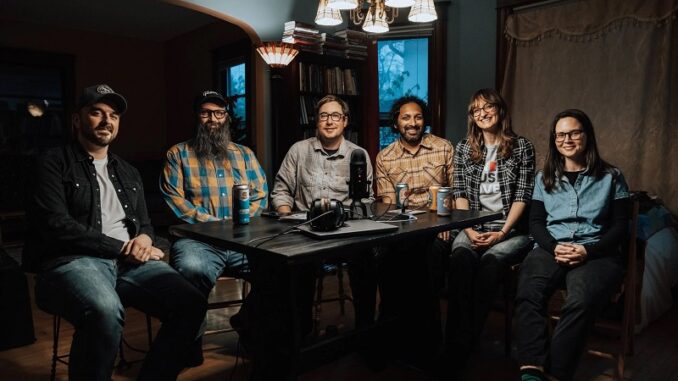
The Gated Community. Photo: Tom Smouse (via Americana UK)
In the face of violence in the streets and unlawful detention what can a musician do, really? They can document what’s going on, make their point and try and raise awareness (and maybe the odd dollar) of the organisations that are protecting citizens from their own law enforcement. Read that sentence, and notice just how screwed up it is to describe daily life in the “shining city on a hill”.
Which brings us to today’s song from The Gated Community. It’s a new recording of a very recently written song, written in response to events in Minneapolis, as singer and songwriter Sumanth Gopinath explains: “After Renee Nicole Good’s murder by ICE agent Jonathan Ross here in Minneapolis on January 7, 2026, I began writing songs that more explicitly address the situation we’re in. I find the ‘protest song’ challenging, as it requires a directness that I tend to avoid in my songwriting. This is my third serious attempt as of late and the one with the most rousing, energizing chorus of the bunch. I am so moved and inspired by the bravery, intelligence, and steadfastness of my fellow Minnesotans in the Twin Cities who, against the odds, are acting tirelessly on behalf of our most vulnerable community members. This song is for them.”
The song is available on Bandcamp, it has a price and there’s an option to add a little more to support the people organising for decency: everyone involed in the recording donated their time and all of its proceeds will be donated to local aid organizations including Minnesota Immigrant Rights Action Committee (MIRAC) — an organization supporting individuals and families impacted by unjust immigration laws and deportations.
And who are The Gated Community? Well, this band that has been described as a Marxist Bluegrass band (you don’t get a lot of them to the pound) was originally a vehicle for Sumanth’s political songs, but has evolved over nineteen years, expanding in size and scope to include many roots music styles and more personal songwriting. It was formed when Sumanth moved from New Haven to Minneapolis to begin working as a professor of music theory at the University of Minnesota, and now features six singers, with the band combining professors like Sumanth (vocals, acoustic guitar, keyboards) and Beth Hartman (vocals, percussion), and artists from various parts of the Twin Cities scene like Rosie Harris (vocals, banjo, cello), Paul Hatlelid (vocals, drums, acoustic guitar), Cody Johnson (vocals, bass), and Nate Knutson (vocals, guitars, mandolin).
thanks and much love to our families, friends, and fans
All proceeds from this recording will go to one or more organizations resisting the occupation of our cities by ICE and providing aid to our community. Everyone involved generously volunteered their time and resources to this project.
Thank you to Tom Campbell, Eva Cohen, Carl and Ina Elliott, Jim and Sara Harris, Marcus dePaula, Michael Gallope, Gabrielle Gopinath, John Miller, Mark Nye, Daniel Owens, Matt Rahaim, Ian Rans, Ellen Stanley, Ryan Stokes, Dean Von Bank, and our families, friends, and neighbors.
Source: The Gated Community (Bandcamp). I would strongly encourage you to buy this digital record (paying as much as you wish) in support of the embattled people of Minnesota, my home state. ||| TRR
Federal immigration agents detained three people and deployed chemical agents at multiple locations around E. 34th Street and Park Avenue in Minneapolis’ Powderhorn neighborhood Tuesday morning. At least two were observers and not the target of immigration enforcement operations.
Around 9:40 a.m., community response networks began sending alerts about Immigration and Customs Enforcement (ICE) door-knocking at E. 34th Street and Park Avenue. By 10 a.m., a crowd of over 100 observers had gathered, confronting agents at multiple intersections.
Among the detainees was a woman who was forcibly removed from her vehicle after agents smashed her passenger-side window.
In a video taken by Sahan Journal, the woman can be seen arguing with agents prior to being grabbed by multiple agents and carried to agents’ vehicle. The woman can be heard shouting that she is disabled and on her way to a doctor’s appointment that ICE was obstructing. Prior to the detention agents had instructed her to drive away.
After being pulled out of a car, a women screams as she’s being arrested by immigrations agents at 34th and Park in Minneapolis on Jan 13, 2026. Credit: Chris Juhn for Sahan Journal
Shortly after, another observer on site was tackled and forcibly put in agents’ vehicle as well. According to state Rep. Aisha Gomez, DFL-Minneapolis, who was present at the scene, agents pushed the man’s head into the concrete prior to carrying him away. Gomez also said that agents were physical with her as well.
“These officers have obviously not had the basic law enforcement training,” Gomez said. “I was shoved with no verbal communication whatsoever.”
Andy Larson, a south Minneapolis resident who was out observing ICE activity Tuesday, told Sahan Journal that one protester kicked out the taillight of an ICE vehicle and was tackled to the ground up the road on Park Avenue and E. 36th Street.
“It was a really good kick,” Larson said.
The protester managed to escape ICE agents, Larson said. ICE deployed chemical irritants and shot pepper balls into the crowd and fled the scene.
According to Sahan Journal photojournalist Chris Juhn, a Hispanic man was also visible in the back of one vehicle. It is unclear whether the man was an observer or target of federal operations. ICE did not respond to Sahan’s request for comment on the operations.
At multiple points during the operation, agents deployed chemical agents at observers. Agents fired pepper balls at observers’ feet and threw canisters of tear gas at the corner of 34th Street and both Park and Oakland avenues prior to leaving the scene. Eyewitness Moses Wolf said there was no singular precipitating event that led to tear gas being deployed on Park Avenue.
“There was a crowd confronting each other telling ICE to get out,” Wolf said. “I didn’t really see any physical altercation happening.” He said it appeared to be a tactic by ICE agents to exit the scene.
Wolf said the confrontation prior to the deployment of tear gas had not escalated beyond what had already been happening.
“It wasn’t anything crazy,” Wolf said. “I turned around for one second and there was this whole entire cloud of it, and pepper spray came with that.”
Eyewitness Neph Sudduth said at Oakland Avenue agents used tear gas as they were leaving.
“They were finally leaving, it was the last car of the convoy,” Sudduth said. “They just threw two or three canisters out at us as they left.”
Both Sudduth and Wolf said they witnessed agents using pepper spray out of the windows of their vehicles as they drove off.
“They just wanted to hurt us cause we told them how we felt, and they didn’t like it,” Sudduth said.
The operation in Powderhorn is part of a flood of federal immigration activity in Minnesota. As many as 2,000 federal agents are present in the state according to reporting from the New York Times, with an additional 1,000 set to be deployed.
For Gomez, the clash with ICE is the new reality of life in the Twin Cities with federal agents present.
“This is what our streets are like,” Gomez said. “We have these masked, unaccountable unknown to us federal agents, and it’s like they’re the secret police.”
Despite the difficulties, Gomez believes observers should and will continue to show up to meet federal agents in the streets.
“Our community is undeterred,” she said. “We’re not going to just lay down. You can gas us and mace us all you want, we’re not going to just lay down.”
Sahan Journal reporter Andrew Hazzard contributed to this story.
During the 2024 campaign, Donald Trump promised to deport every illegal immigrant who was a rapist, murderer, or thief. He also promised to deport 20 million immigrants. Some voters believed the first promise; other voters believed the second.
Because people are stupid, that first group of voters believed that there were 20 million undocumented immigrants who have committed felonies. This is not possible. The total number of people in jail in America today—this includes federal, state, local, and tribal land prisons—is just under 2 million. The number of undocumented immigrants who have committed serious crimes cannot be 10x the entire prison population of the United States. If it were, then daily life in America would look like Escape from New York.
So some Trump voters were duped owing to their general ignorance and/or innumeracy.
But others were not. Others signed up for Trump because of his second promise (the 20 million deportations) and viewed the first promise (about deporting only criminals) as the pap necessary to get the suckers onboard.
There are two crucial questions about these two groups. The first is:
What is their relative size? What percentage of Republican voters were tricked into voting for Trump’s immigration policies versus what percentage are getting exactly what they wanted?
Would you like to guess? Go ahead. I promise that whatever you’re thinking, it isn’t dark enough.
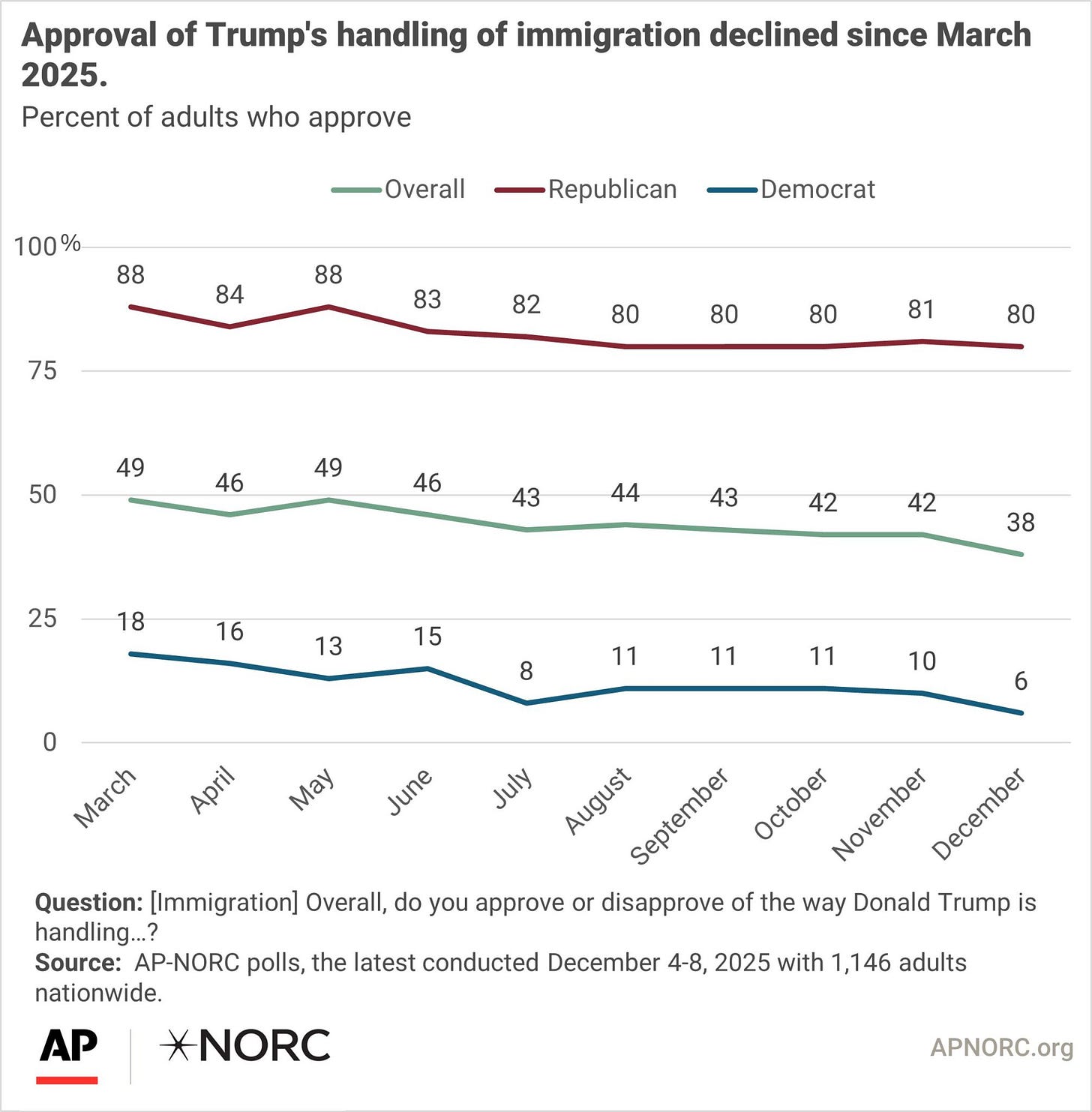
Here’s a survey tracking Republican approval of Trump’s immigration policies (the top line, in red) over most of 2025:
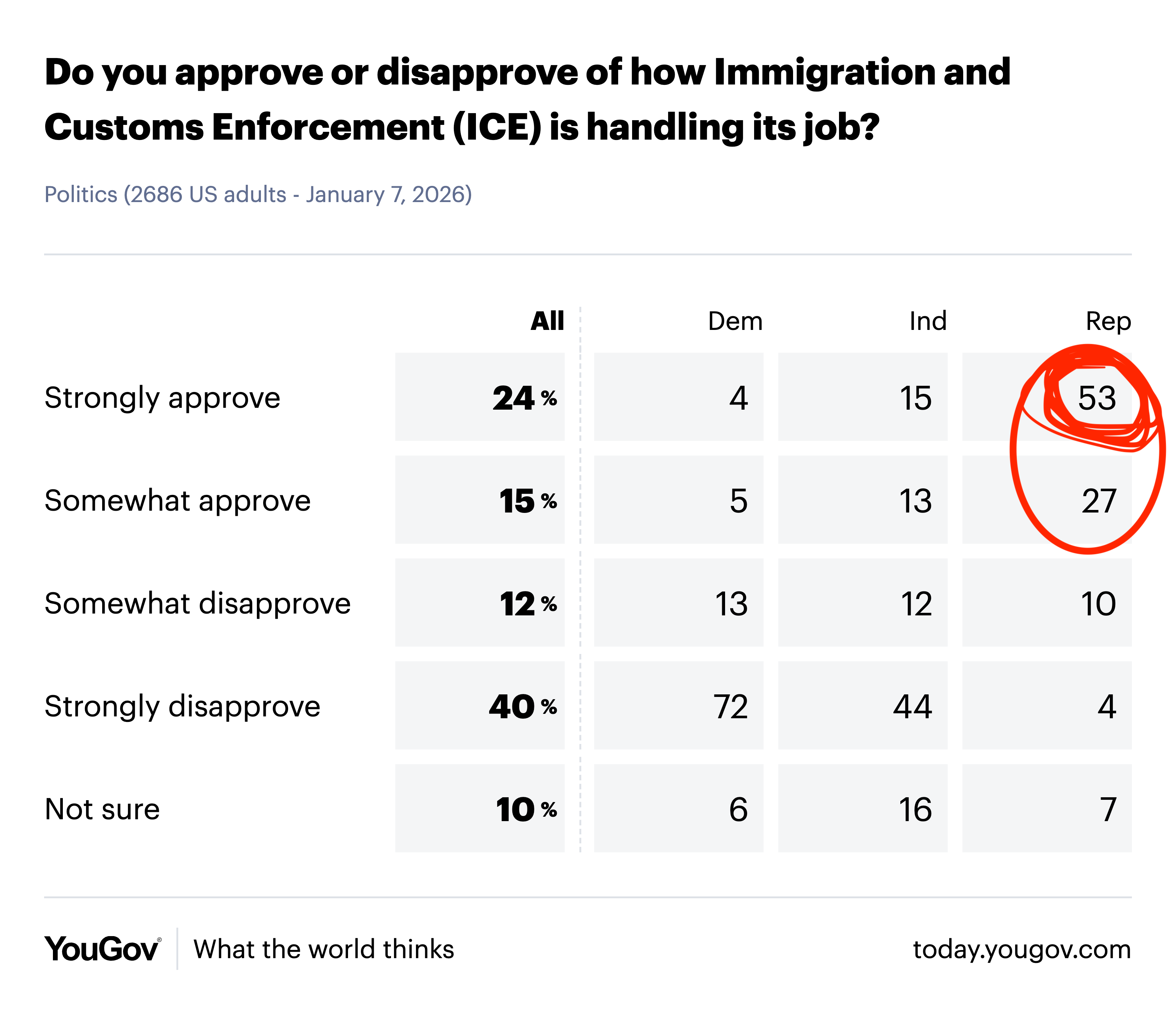
That’s a consistent level of support around 80 percent. Now here is the first poll conducted after the killing of Renee Good:
Even after the killing of an unarmed American citizen, a total of 80 percent of Republicans approve of what ICE is doing and 53 percent of Republicans strongly approve.
It seems pretty clear that, at best, one in five Trump voters were duped. The majority of them are getting exactly what they wanted.
Now if Trump were to lose the support of 20 percent of Republicans voters—or even 14 percent—it would be meaningful for Republican electoral prospects. Which is nice.
The problem is that having 80 percent of Republican voters actively supporting a fascist race war is meaningful for our societal prospects.
Which brings us to the second question: How are these groups distributed through the elite positions of power in government? And here it seems that many of the Republicans most invested in a race war have a great deal of power. Like, for instance, Vice President JD Vance, Deputy Chief of Staff Stephen Miller, and Secretary of Homeland Security Kristi Noem.
At the elite levels, even the idea of 20 million deportations is too little. Here’s a tweet from the Department of Homeland Security on New Year’s Eve:
100 million deportations?
There are 43 million foreign-born Americans. Most of them are legal immigrants. In order to perform 100 million deportations, DHS would have to round up every immigrant of any status—even naturalized citizens—and then also snatch 57 million American who are citizens by birth and deport them, too.
Want to guess who those other 57 million Americans might be?
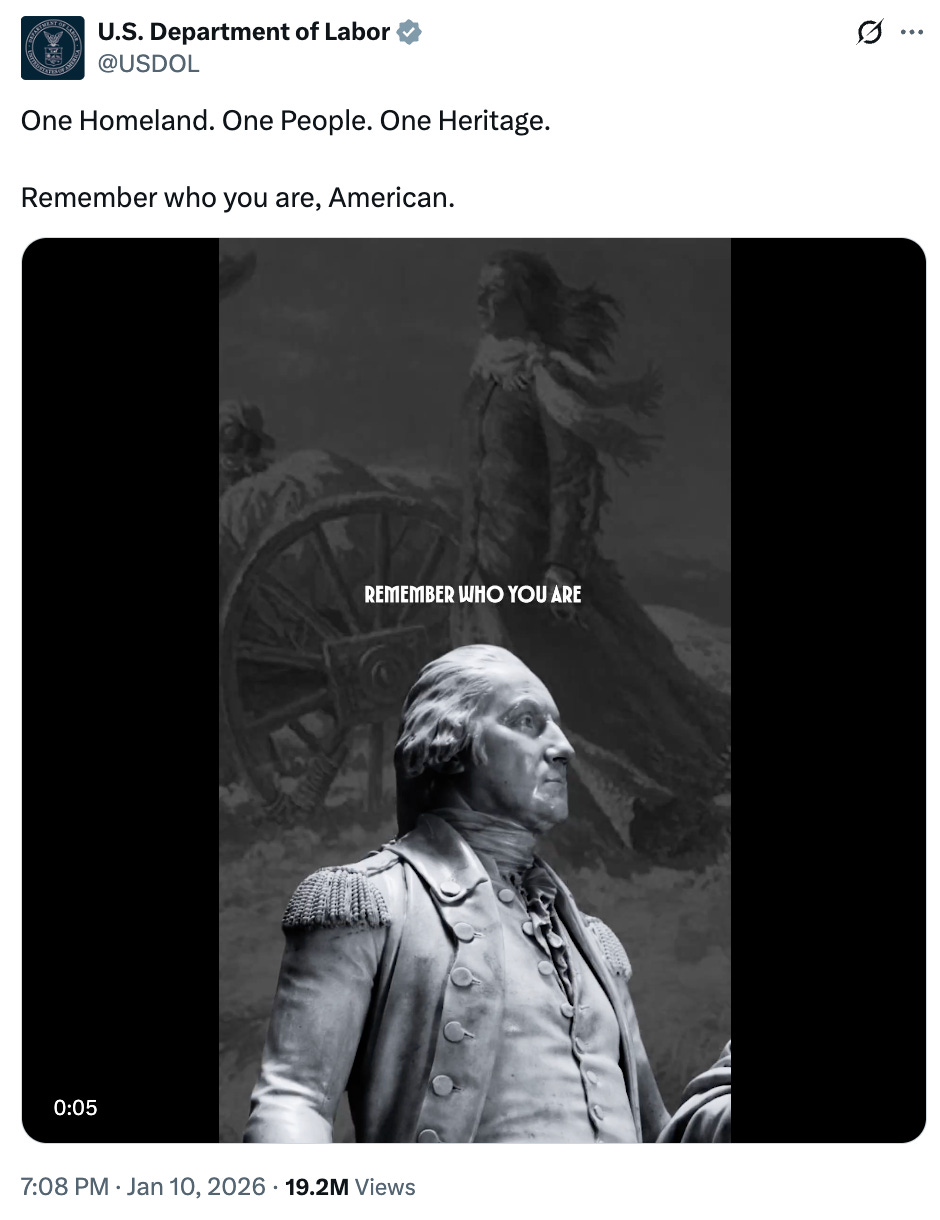
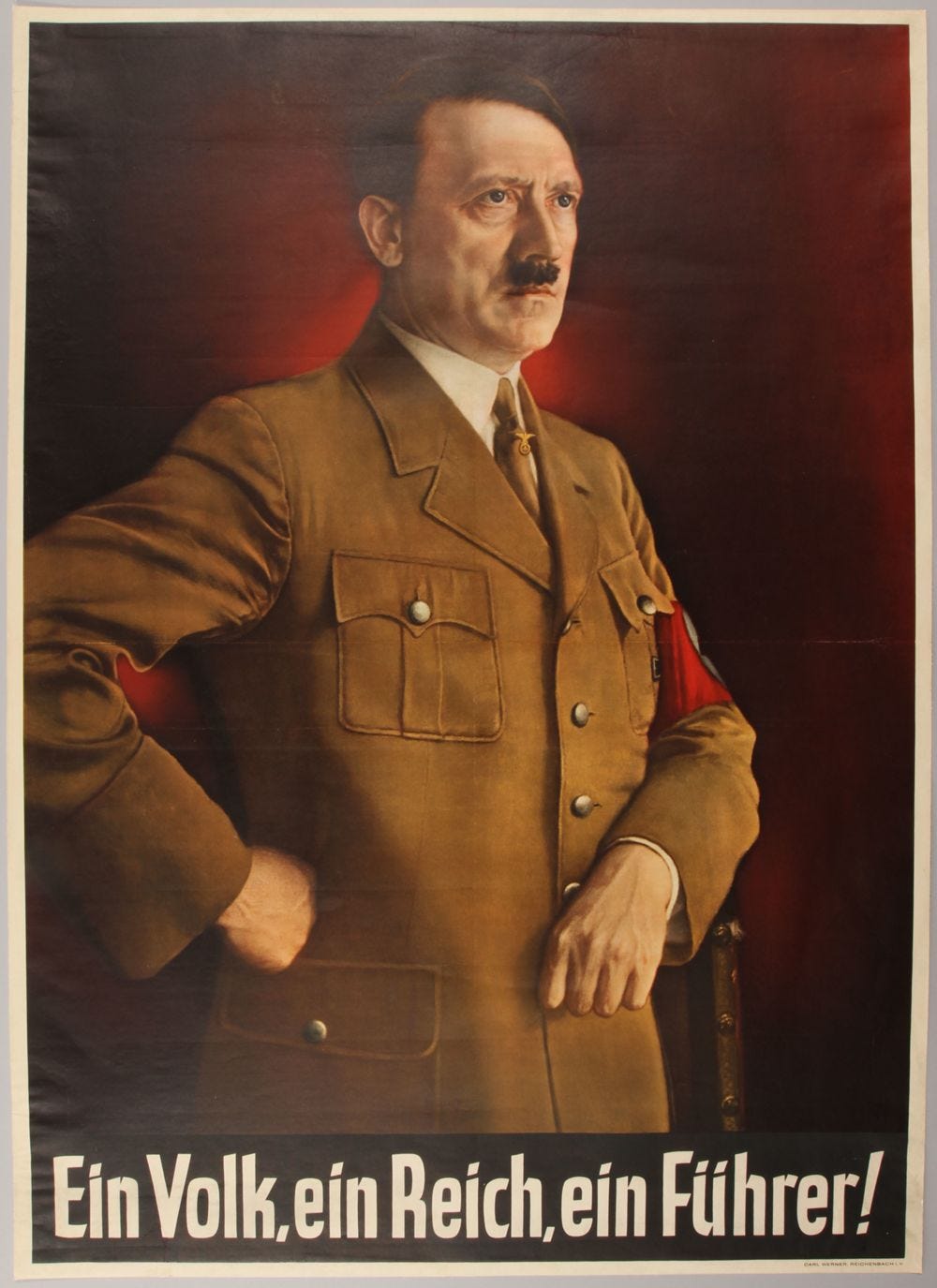
This week the Department of Labor published this:
Of course, the slogan sounds better in the original German.
Oh, and don’t forget the Department of Labor’s heroic propaganda posters depicting the American worker in a very specific way.
On the one hand, it feels weird to say that the U.S. government is attempting some low-key ethnic cleansing.
On the other hand, the reality is that we have a masked secret police force going door-to-door attempting to kidnap brown people; one government agency publicly daydreaming about deporting 100 million people; and another government agency saying that the ideal worker is a 20-year-old white guy.
2. Demographics
Another tell: This administration is obsessed with America’s falling fertility rate. From the NYT:
Vice President JD Vance last week called falling marriage rates “a big problem.” The deputy secretary of Health and Human Services in December urged his agency to “make America fertile again.” And at a recent conference for young conservatives, Sean Duffy, the transportation secretary, doubled down on the importance of marriage and children, holding out his nine kids as a model for others to follow.
Full disclosure: I am also obsessed with America’s falling fertility rate. Enough that I wrote a book about it.
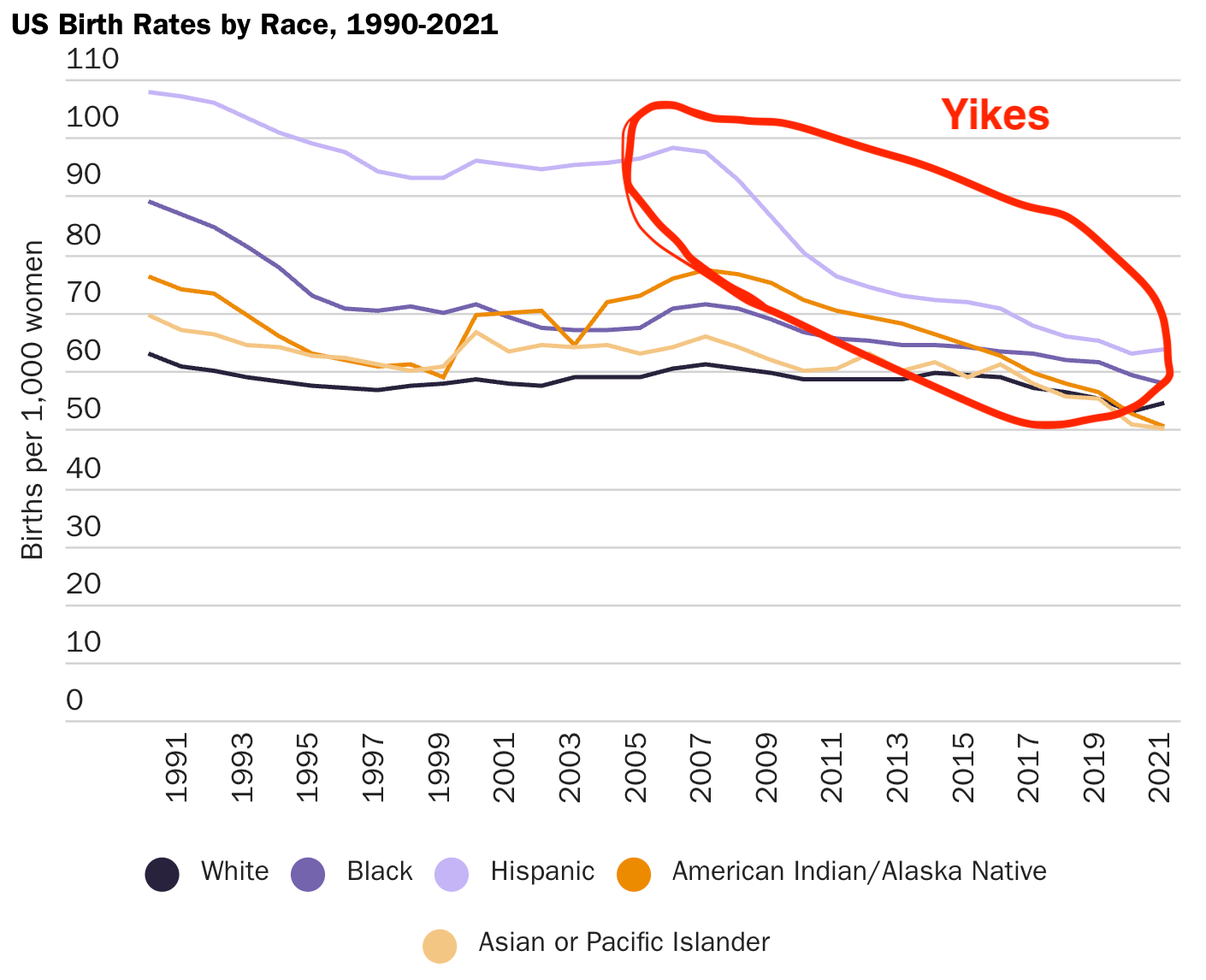
The problem here is that nearly all of the declines in total fertility rate (TFR) over the last decade have been the result of declining Hispanic fertility.
Here’s the deal: The TFR—the total number of kids the average woman has over the course of her life—has been below the replacement level, but relatively stable, among white and black Americans for the last generation or so. But America’s TFR kept declining anyway. Why?
Because Hispanic Americans—many of whom were recent immigrants—had TFR’s higher than the U.S. average. And their baby-making propped up the nationwide number. The problem is that, as recent immigrants spent time in America, their reproductive behavior began regressing to the mean. The shift has been dramatic:
If you were concerned about the fertility rate in America, would you be trying to (a) halt all immigration—since immigrants usually bring with them fertility rates higher than native-born Americans—and (b) deport 100 million people from the ethnic group that has the highest fertility rate?
No.
The only reasonable conclusion is that the concern of people in the Trump administration isn’t about the total fertility rate. It’s about the white fertility rate.
I don’t know how much clearer the regime could be.
So tell me: What does the pie chart look like on Republican voters and race war? What is the percentage of Trump voters in each of these categories:
Group A: Sees and understands the administration’s intent and supports it.
Group B: Sees and understands, but oppose it.
Group C: Do not understand that the regime views its program as part of a race war and thinks it’s all business as usual?
And follow-up question: How big can Group A be for us to retain a functional, liberal society?
“Mr. Speaker, I rise today to announce I will be impeaching Homeland Security Secretary Kristi Noem,” announced Rep. Robin Kelly of Illinois.
“Secretary Noem has violated the Constitution and she needs to be held accountable for terrorizing our communities. Operation Midway Blitz has torn apart the Chicagoland area. President Trump declared war on Chicago and then he brought violence and destruction to our city and our suburbs in the form of immigration enforcement.”
Rep. Kelly then broke down some of the outrageous violence that ICE has visited upon her district.
“In my district, federal agents repelled down from Black Hawk helicopters and burst into an apartment building in the South Shore area. They dragged US citizens and non-citizens alike out of their beds in the middle of the night. They claimed the apartment was infiltrated by members of a Venezuelan gang. I don’t understand this president’s obsession with Venezuela, but they did not arrest a single member from that gang.”
“I visited that apartment building and saw firsthand the destruction those agents left. Doors to people’s homes or apartments were kicked down. Belongings, including little kids’ toys, were strewn about in the hallway. That raid and so many others shook our community, not just immigrants, but everyone. Now, Secretary Noem has brought her reign of terror to Minneapolis after she left Charlotte and Raleigh. We have all seen what happened.”
“ICE officers shot and killed Renee Nicole Good in cold blood. Without knowing any of the facts or an investigation, Secretary Noem lied about what happened. She called [a] beloved 37-year-old mom a domestic terrorist. Secretary Noem and her rogue agents are the ones terrorizing our communities, and she is breaking the law to do so. I will hold her accountable.”
“I’m filing three articles of impeachment against Secretary Noem. Number one, obstruction of Congress. Secretary Noem has denied me and other members of Congress oversight of ICE detention facilities. It is our constitutional duty to find out what’s happening in these centers where people are reportedly being treated like less than animals. Two, violation of public trust.”
“Secretary Noem directed ICE agents to arrest people without warrants, use tear gas against citizens, and ignore due process. She claims she’s taken murderers and rapists off our streets, but none of the 614 people arrested during Operation Midway Blitz has been charged or convicted of murder or rape.”
“Three, self-dealing. Secretary Noem has abused her power for personal benefit. She steered a federal contract to a new firm run by a friend, her friend. Her propaganda campaign to recruit ICE agents cost taxpayers $200 million. She made a video that turned the South Shore raid into something that looked more like a movie trailer. But make no mistake, this is not a movie. This is real life and real people are being hurt and killed. I really have to wonder who are the people behind the mask. These DHS agents have no identifying factor.”
“From all their botched raids and officer-involved shootings, I have to ask, what is their training like? What is the vetting? Is Secretary Noem recruiting January 6th insurrectionists? I was one of the last members of Congress to escape the House Gallery on January 6th. I remember hiding on my hands and knees and running through the hallways to a safe room. Insurrectionists are not fit to serve as law enforcement. I realize that impeachment of Secretary Noem does not bring Renee back.”
“True justice would be Renee alive today at home with her family. Impeachment doesn’t bring back the four other people killed by immigration officers this year, including a man in Chicago. We could not bring them back to their loved ones. What we can do, though, is impeach Secretary Noem. Hold her accountable. Let her know the public is watching. In this country, we do not kill people in cold blood without consequences. These are not policy disagreements.”
“These are violations of her oath of office and she must answer for her impeachable actions.”
Audience members at the all-ages Minneapolis rock venue Pilllar Forum tussled with ICE agents on the street outside the club on Sunday — prompting that night’s show to be canceled.
The owner of Pilllar Forum, Corey Bracken, said several of his customers and musicians were pepper-sprayed by ICE agents and at least two were hit with batons on the street outside the venue, at 2300 Central Av. NE., where other ICE detainments and community protests have happened in recent days.
“My staff doesn’t feel safe after this, and our artists and customers don’t feel safe,” said Bracken, a dad who expanded his skateboarding store into a music venue and coffee shop in 2023 to bring more live music and art to underage fans.
He is leaving it up to his staff and the bands themselves to decide whether to proceed with upcoming concerts, including several more scheduled this week.
The ruckus started shortly after the 6:30 p.m. showtime for a four-band bill headlined by Pilllar Forum regular Anita Velveeta, a popular trans/queer punk act. Audience members saw ICE agents pull up and detain two individuals outside the neighboring Supermercado Latino market, prompting the club’s young music fans to quickly exit onto the street and protest the agents’ actions.
The Department of Homeland Security didn’t respond to a Star Tribune request for comment. An employee at Supermercado Latino also declined to comment on the incident.
Antonio Carvale, singer/guitarist in one of Sunday’s opening bands, BlueDriver, said he was one of five people at the venue who had to be treated with water and saline solution after being hit with pepper spray. He said agents fired the spray after they pushed a protester who pushed back.
“Honestly, the pain felt brutal, but fortunately the community was prepared and helped treat our eyes,” Carvale said, but he commiserated with a bandmate who was also struck by a baton and “banged up pretty bad.”
The band was disappointed Sunday’s gig then was canceled, but he added, “It would’ve been hard to play when I couldn’t even see the frets.”
One of the audience members who was pepper-sprayed, Jess Roberts of Minneapolis, said she had to go to an urgent care clinic because she was sprayed in the ear, which led to an infection.
The run-in with ICE followed a viral Instagram post by Pilllar Forum that went up Friday and landed 25,000 likes. It showed a peaceful but loud crowd of protesters shouting down ICE agents on Central Avenue, with the message, “And that is how you get it done.”
Minneapolis City Council President Elliott Payne and the new Minnesota state senator representing northeast Minneapolis, Doron Clark, joined Bracken in another social media video posted late Sunday denouncing the incident. Clark called Pilllar Forum “an institution here on Central.”
Payne urged residents, “Stay safe and stay vigilant.”
Twin Cities musicians and music fans offered online support for Pilllar Forum after Sunday’s mayhem.
“Thank you for supporting the community!” veteran rocker Tim Ritter of the band Muun Bato wrote on the venue’s Facebook page.
Bracken did offer refunds to paid attendees of Sunday’s canceled show, proceeds of which were to be donated to families affected by ICE detainments, per headliner Anita Velveeta’s request.
“So far, I haven’t heard from anyone who wants their money back,” Bracken said.
Brandon Siguenza (center) and his wife, Julia Rose (left) in happier times. Source: Facebook
Good morning,
My name is Brandon Siguenza, and I am a US citizen from Minneapolis. Yesterday, while doing legal observation, ICE stopped their cars to harass my friend and me. They sprayed pepper spray into the vent of our vehicle. We held our hands in the air and told them we were not obstructing, that the car was in park and they were free to drive forward and away. There was no active immigration raid. They returned to their cars, and drove forward a bit, then decided to stop again. They surrounded us, smashed the windows of our car, opened the doors (they were unlocked), ripped my friend and I out of the car and arrested us on charges of obstruction.
I was put in an unmarked SUV, separated from my friend. As I was put in the back seat an ICE agent tore the whistle off my neck and said “I’ll be taking this, I might need it later.” My phone was knocked out of my hand while being arrested. As we drove away I asked the driver and the passenger if they wouldn’t mind buckling my seatbelt, as they were driving erratically. I was ignored. I asked them if I could have the handcuffs loosened, as I was losing circulation, and was told no. At one point the passenger realized his own driver’s license was in the backseat next to mine, and tried to surreptitiously grab it without me seeing it.
We were taken to the Whipple federal building, where I saw dozens of brown people being processed in an unheated garage. I was frisked, told of my charges, and saw buses and vans being prepped. I later learned that these were being filled with detainees and driven to the airport for deportation. As we were led in, I noticed that the building was very busy. I got the impression that one of the 2 agents bringing me around was being trained. At multiple points throughout my stay, government agents were unable to open doors, not sure where they were meant to be going, and overall confused and overwhelmed. They couldn’t figure out how to use the building phones, or complained about a lack of cell service preventing them from checking the internet or making calls.
The people in the cells were extremely scared. We heard people screaming “let me out!”, crying, wailing and terrified screams. There were cells with as many as 8 people. I have no way of knowing how long they have been there, if they were allowed any contact with the outside world, or if they were being brought food or water. Most people were staring at the ground with almost no energy. I was not allowed to talk to anyone imprisoned. I distinctly remember seeing a desperate woman. She was staring at the ground with her head in her hands crying, hopeless, while her friend or family member sat on a bathroom seat observed by 3 men.
My friend and I were put in an area for “USCs,” which we eventually learned meant US citizens, separated by gender. We were imprisoned for 8 hours, during which my friend was never allowed a phone call. I was allowed to call my wife and tell her where I was. During my interview with Special Agent William and Special Agent Garcia, they asked me to empty my pockets. When I pulled out gloves, Agent William said those were meant to be taken when I was processed, and complained about having to fill out the form again. He frisked me once more, where he found glass in my pocket from when our car window was shattered. He filled out the form listing my personal items again, but put the wrong date. I was read my rights, I pleaded the fifth and was led back to my cell.
Food, water, and bathroom breaks were extremely difficult to acquire. I would ask over the intercom provided in the cell for a bathroom break, be told someone was on their way, then ask again 20 minutes later, be told someone was on their way, wait another 20 minutes, etc. Eventually they either turned off the intercom or it stopped working, because no one would respond. I could get water and bathroom breaks by pounding on the glass when someone happened to walk by and beg them directly. Hours would go by without anyone checking on us. I am vegan and the only food they offered were turkey sandwiches, fruit snacks with gelatin, and granola bars with honey. I eventually ate a granola bar out of hunger.
I was in the cell alone for between 1 and 2 hours, then another man was put into my cell, whose shirt was ripped open from his arrest, and an injured toe, who was carried aggressively into an unmarked car during his arrest. After about 4-5 hours, another man was brought in who had a cut on his head from his arrest. He told me he was tackled by 4 or 5 agents during his arrest. At no point was he offered medical assistance.
Later I was told that a lawyer was here to see me, and I was able to speak with him in a visitation room. The special agent told me that the door could not be closed all the way, so it was cracked during my interaction with my lawyer. I got the impression that they were not used to having lawyers present, and were trying to follow procedure as best they could. I asked an agent if the other detainees were allowed lawyers and was not answered.
At one point, 3 men from the department of Homeland Security Investigations brought me into a cell. They insinuated that they could help me out. After inquiring several times what exactly they meant they finally told me that they could offer undocumented family members of mine legal protection if I have any (I don’t), or money, in exchange for giving them the names of protest organizers, or undocumented persons. I was shocked, and told them no.
Finally, after hours of detention, I was told to follow an agent. At no point was I told whether or not I was being charged, or where I was going, but I was led out of the building. I asked if I could use a phone to call my wife to pick me up, and was told I could not. After pleading for several minutes eventually Special Agent William let me use his phone to call my wife. As I was escorted off the property by government agents, I was told to turn right. I was escorted to the protest area, where 5 minutes later, tear gas was deployed and I was struck by a paint ball gun. I was not protesting, I was simply being released without charges after an 8 hour detention. I was on the other side of the street, as instructed by the agents that released me and the agents shouting orders over a bullhorn. A passerby who was tear gassed was panicking and having an asthma attack, so I helped her find a medic to get her an inhaler. I used a stranger’s phone to co-ordinate pickup, and was picked up by my wife.
During my detention I knew that I was being released. I knew that as a citizen of the United States I have legal protection. The hundred or so other people being detained had no such protection. At this time I don’t need your help, it is the families that are being separated, abused, terrorized, harassed and killed that need your help. If this is happening to me, an American citizen born in the United States, then what is happening to the people in here that have no one calling lawyers on their behalf? That have no constitutional rights to due process? What is happening to the people that they will never be released to see their families, go to their jobs, or walk through their city ever again?
Please take care of yourselves, your family, and your community. I am safe and healthy, if you feel compelled to help, please offer your help to the Immigrant Defense Network at https://immigrantdefensenetwork.org/. If you know someone detained by ICE, call or text CAIR-MN at 612-206-3360 for 24/7 legal intake.
KARE 11, “Taken by ICE & Detained | Breaking the News Plus”
What is it like in the Minneapolis ICE Detention Center? Patty O’Keefe & Brandon Siguenza join Jana to discuss their experience being detained for over 9 hours.
Ukrainian, abducted as a teenager from occupied Donbas in 2019, sentenced by Russian court to 22 years (Kharkiv Human Rights Protection Group, January 9th)
‘Russian world’ in occupied Luhansk oblast: no heating and deliberately cut off from mobile telephones and Internet (Kharkiv Human Rights Protection Group, January 8th)
Desperate plea from Russian prison: Ukrainian political prisoners need to be freed now, not after ‘peace deal’ (Kharkiv Human Rights Protection Group, January 7th)
Even Putin supporter debunks Russia’s lies about a ‘Ukrainian drone attack on civilians’ in occupied Khorly (Kharkiv Human Rights Protection Group, January 5th)
No answers & questions to Red Cross after Russia holds 64-year-old Melitopol journalist prisoner for third year (Kharkiv Human Rights Protection Group, January 5th)
Ukrainian leaders in UK call for Kemi Badenoch to sack David Wolfson, Russian assets to be used to aid Ukraine (USC, January 8th)
Upcoming events:
Thursday 15th January, at 7pm, Russia’s War On Ukraine, Us Strategy Review – Stopping The Authoritarians, organised by Ukraine Solidarity Campaign Scotland, register here.
Thursday 5th February, at 6.30pm. Try Me For Treason reading and discussion event at Clore Lecture Theatre, Birkbeck College Clore Management Centre, Torrington Square, London WC1E 7JL. Details here.
This bulletin is put together by labour movement activists in solidarity with Ukrainian resistance. To receive it by email each Monday, email us at 2022ukrainesolidarity@gmail.com.
Beginning in 1943, the War Department published a series of pamphlets for U.S. Army personnel in the European theater of World War II. Titled Army Talks, the series was designed “to help [the personnel] become better-informed men and women and therefore better soldiers.”
On March 24, 1945, the topic for the week was “FASCISM!”
“You are away from home, separated from your families, no longer at a civilian job or at school and many of you are risking your very lives,” the pamphlet explained, “because of a thing called fascism.” But, the publication asked, what is fascism? “Fascism is not the easiest thing to identify and analyze,” it said, “nor, once in power, is it easy to destroy. It is important for our future and that of the world that as many of us as possible understand the causes and practices of fascism, in order to combat it.”
Fascism, the U.S. government document explained, “is government by the few and for the few. The objective is seizure and control of the economic, political, social, and cultural life of the state.” “The people run democratic governments, but fascist governments run the people.”
“The basic principles of democracy stand in the way of their desires; hence—democracy must go! Anyone who is not a member of their inner gang has to do what he’s told. They permit no civil liberties, no equality before the law.” “Fascism treats women as mere breeders. ‘Children, kitchen, and the church,’ was the Nazi slogan for women,” the pamphlet said.
Fascists “make their own rules and change them when they choose…. They maintain themselves in power by use of force combined with propaganda based on primitive ideas of ‘blood’ and ‘race,’ by skillful manipulation of fear and hate, and by false promise of security. The propaganda glorifies war and insists it is smart and ‘realistic’ to be pitiless and violent.”
Fascists understood that “the fundamental principle of democracy—faith in the common sense of the common people—was the direct opposite of the fascist principle of rule by the elite few,” it explained, “[s]o they fought democracy…. They played political, religious, social, and economic groups against each other and seized power while these groups struggled.”
Americans should not be fooled into thinking that fascism could not come to America, the pamphlet warned; after all, “[w]e once laughed Hitler off as a harmless little clown with a funny mustache.” And indeed, the U.S. had experienced “sorry instances of mob sadism, lynchings, vigilantism, terror, and suppression of civil liberties. We have had our hooded gangs, Black Legions, Silver Shirts, and racial and religious bigots. All of them, in the name of Americanism, have used undemocratic methods and doctrines which…can be properly identified as ‘fascist.’”
The War Department thought it was important for Americans to understand the tactics fascists would use to take power in the United States. They would try to gain power “under the guise of ‘super-patriotism’ and ‘super-Americanism.’” And they would use three techniques:
First, they would pit religious, racial, and economic groups against one another to break down national unity. Part of that effort to divide and conquer would be a “well-planned ‘hate campaign’ against minority races, religions, and other groups.”
Second, they would deny any need for international cooperation, because that would fly in the face of their insistence that their supporters were better than everyone else. “In place of international cooperation, the fascists seek to substitute a perverted sort of ultra-nationalism which tells their people that they are the only people in the world who count. With this goes hatred and suspicion toward the people of all other nations.”
Third, fascists would insist that “the world has but two choices—either fascism or communism, and they label as ‘communists’ everyone who refuses to support them.”
It is “vitally important” to learn to spot native fascists, the government said, “even though they adopt names and slogans with popular appeal, drape themselves with the American flag, and attempt to carry out their program in the name of the democracy they are trying to destroy.”
The only way to stop the rise of fascism in the United States, the document said, “is by making our democracy work and by actively cooperating to preserve world peace and security.” In the midst of the insecurity of the modern world, the hatred at the root of fascism “fulfills a triple mission.” By dividing people, it weakens democracy. “By getting men to hate rather than to think,” it prevents them “from seeking the real cause and a democratic solution to the problem.” By falsely promising prosperity, it lures people to embrace its security.
“Fascism thrives on indifference and ignorance,” it warned. Freedom requires “being alert and on guard against the infringement not only of our own freedom but the freedom of every American. If we permit discrimination, prejudice, or hate to rob anyone of his democratic rights, our own freedom and all democracy is threatened.”
In September 2024, Alexander Krichevsky, a 58-year-old resident of Izhevsk, posted a lengthy comment on a Chechen opposition blogger’s Telegram channel. In the comment, Krichevsky compared Putin and the “FSB clique” to a “darkness” which must be destroyed. The security forces deemed this statement incitement to murder the president and FSB officers. They monitored the man and intercepted his internet traffic. Last December, Krichevsky was detained and remanded in custody to a pretrial detention center despite his ailments and the fact that he is confined to a wheelchair. His ailing mother was placed in a care home, where she died a month later. Today, at the Central District Military Court in Yekaterinburg, where Krichevsky’s case is being heard, the prosecutor requested that he be given the maximum sentence of six years in prison.
“That is why we listen to him, because he is not afraid—he’s a ray of freedom in a kingdom of darkness! And only together will we destroy this darkness, only when we understand that we have only one enemy—Putin and his FSB clique. . . . Both you and we must destroy this enemy to continue living as peaceful neighbors,” 58-year-old Izhevsk resident Alexander Krichevsky wrote in a chat on the channel of opposition Chechen blogger Tumso Abdurakhmanov aka Abu Saddam Shishani, on 11 September 2024.
This was Krichevsky’s response to a user who had asked Abdurakhmanov himself in a chat: “Tumso, aren’t you afraid that Kadyrov’s people might find you?”
When questioned in court, Krichevsky said that he was sure he was responding to the user personally, not writing in a public chat. He repeated many times that he had only figurative “destruction” in mind and had been trying to “reconcile” Abdurakhmanov’s readership by pointing out that they had only one enemy.
“Of course, I wasn’t even thinking about physically destroying such a large number of people and didn’t understand how [what I wrote] would even look. Apparently, my love for pretty words—all those rays of light and other nonsense—let me down. I was thinking in terms of games: when a person plays checkers or chess, they destroy their opponent’s pieces. Roughly speaking, that was the image I had in my head,” Krichevsky said in court.
The FSB operative who discovered Krichevsky’s comment saw it not as criticism alone, but also as a “public call to murder the president of the Russian Federation and officers of the Federal Security Service.”
The same conclusion was reached by Polina Komova, a philologist and expert at the Ministry of Internal Affairs Forensic Center in Udmurtia. She acknowledged in court that the word “destroy” could have other meanings “depending on the context,” but in her opinion it could be understood only in its literal meaning—that is, “to end [someone’s] existence, to exterminate”—in Krichevsky’s comment.
“He was planning a terrorist attack involving self-detonation”: wiretapping and arrest
The security forces began monitoring Krichevsky in early December 2024. It emerged in court that the FSB had requested data on his calls and connections from Rostelecom and learned that on 11 September, when he wrote the comment, he had accessed Telegram from home. Megafon provided the security forces with information about the base stations in the area where Krichevsky’s phone number pinged that day.
On 5 December 2024, the Supreme Court of Udmurtia gave the FSB permission to tap Krichevsky’s phones, and a few days later it approved “gathering information from technical communication channels and acquiring computer information.” A few days before Krichevsky’s arrest, operatives monitored his apartment to “document illegal activities.” The report states that Krichevsky did not leave his home.
On 19 December 2024, Krichevsky was detained and sent to a pretrial detention center. He described his arrest to journalists.
“There was a knock on the door at seven in the morning, and seven people came into [our] small flat: five FSB officers and two eyewitnesses. I opened the door myself. They immediately sat me down on a chair in the hallway. My ailing mother was lying there, barely alive. They said, ‘Can you hand over [your phone]?’ They tried to intimidate me once: ‘If you refuse, we’ll take you away and charge you with additional offenses.’ I realized that resistance was futile. I gave them the phone, and they looked at it and took what they needed.”
The social media comment charges against Krichevsky were accompanied by an FSB report containing much more serious, but in effect unproven, allegations. The document states that, according to “intelligence,” Krichevsky, who opposes the “state’s political course” and the conduct of the “special military operation,” supported radical Islamists fighting for Ukraine and was planning to convert to Islam and carry out a terrorist attack in Udmurtia “by blowing himself up with cooking gas.” The court never did hear what this report was based on.
Photo: Mediazona
“None of my comments or my own thoughts bear this out. When I heard this business about blowing myself up . . . In this case, everything that the prosecutor has just read aloud is pure speculation on the part of the investigators. None of my quotes corroborates it,” Krichevsky said in court.
Judge Alexander Raitsky simply reminded Krichevsky that the case centered on a single [social media] comment, which the defendant himself did not disput, and that the court would evaluate the evidence in the deliberation room.
The case file also contains another comment by Krichevsky from the same written exchange: “Many empires have collapsed in this world. I myself foresee the end of the Russkies [rusnya]. I don’t feel sorry for them: let them collapse with a bang. That’s where they belong. I myself hate these FSBniks, pigs [cops], and other scum who suck the blood of our homeland and shit on our neighbors.”
The security forces deemed this “a statement containing a negative assessment of the group of persons sharing the profession of Federal Security Service officers and police officers,” but it was not included in the indictment.
Responding to the judge’s question about this comment, Krichevsky said that he sometimes tried to “adapt” to the rude tone of the conversation [on the Telegram channel’s chat].
“My mother died four weeks after my arrest”: wheelchair-bound in a detention center
Krichevsky had worked as a systems administrator in Izhevsk before his arrest.
As a child, Krichevsky had moved with his family from Udmurtia to Rostov-on-Don. After high school, he enrolled in medical school, but in 1989 he broke his spine and had to drop out because his left leg was paralyzed and he had lost feeling in his right leg. After a long period of rehabilitation, he was able to walk again, but was unable to recover fully: he had a severe limp and had difficulty going up stairs.
Krichevsky said in court that his father had committed suicide on 11 September 2008.
“He had terminal cancer. He was in serious pain and turned to me because I was in medical school. He wanted me to tell him what poison he could use to commit suicide. I refused to do it. Then, two days before his death, I noticed he was sharpening a knife in an odd way. He died in a rather original way, if that word is appropriate in this situation—he stabbed himself in the heart with a knife,” Krichevsky told the court.
In early 2010, during a trip to Thailand, Krichevsky broke his left leg, which had been paralyzed since his [accident in 1989]. He underwent surgery at a local hospital, but he could not stay in hospital for long because his visa had expired. Krichevsky returned to his hometown of Izhevsk, where he underwent a second operation, but his condition only worsened.
“My knee wouldn’t straighten. They tried to do something about it, but because I had spinal injuries, my knee spasmed, and it remained crooked and they couldn’t do anything about it. And my hip didn’t recover either; I also had a fractured hip,” Krichevsky told the court.
Since then, Krichevsky has been confined to a wheelchair. Other ailments have also emerged: kidney problems, emphysema, and head tremors.
“I don’t know whether it’s early Parkinson’s combined with Alzheimer’s, or something else,” Krichevsky said.
Krichevsky had been living with his elderly mother and caring for her since 2016. Last year, she was hospitalized with a complex fracture. After she was discharged, she was unable to walk, and Krichevsky would help her to sit up and do breathing exercises in order to prevent pulmonary edema and bedsores. After Krichevsky was arrested, the woman was sent to a care home. She died of a pulmonary edema a month later.
“They apparently left her lying in bed at the care home. When a person lies in a horizontal position for a long time, they develop a pulmonary edema. That’s what my mother died of,” he said in court.
Photo: Mediazona
While in pretrial detention, Krichevsky formally lost his Group I disability status, which he had prior to his arrest, and so he was unable to obtain a medical examination.
According to Krichevsky, a neurologist at the Izhevsk detention center promised to send him to a hospital, but instead Krichevsky was transferred to another pretrial detention center. “I thought they were taking me to a hospital, but they took me first to Perm and then to Yekaterinburg. They basically lied to me when they said they were taking me to a hospital,” he said on the stand.
Krichevskny never did get any medical attention: “We’ll only help you if you’re dying, [they said.] Otherwise, just sit there and suffer.”
“Radical views and hostility toward the current government”: trial and pleadings
Krichevsky’s trial was postponed five times in a row: it took a long time to bring him in his wheelchair, first to Detention Center No. 1 in Yekaterinburg, and then to the court. He was brought to the hearings late, and had to spend four to five hours in the police van, where, according to Krichevsky, the temperature was the same as outside.
At the beginning of the trial, Krichevsky filed a motion requesting that he be assigned an inpatient forensic examination and treatment. He said that he had never been examined by a neurologist at the Yekaterinburg detention center, only by a GP. He was taken for examination to the local medical unit, which was not equipped for people with disabilities: there was a “big step” in front of the toilet and sink which he could not get over. As a result, the doctors only checked his reflexes and sent him back.
In their medical report, the doctors at the detention center stated that Krichevsky had no disability and that his overall health was satisfactory, meaning that he was able to take part in the court hearings.
Before the proceedings, Krichevsky again requested to be sent for treatment, “in accordance with the neurologist’s recommendation” in Izhevsk, but Judge Raitsky denied the request, seeing no need for it. Prosecutor Artem Terentyev also asked that the request be denied, as it went “beyond the scope of the criminal case under consideration.”
During the trial, the prosecutor asked that Krichevsky be imprisoned for six years in a medium-security penal colony. The prosecutor stressed that the defendant had “radical views” and was “hostile toward the current government of the Russian Federation and its officials,” and that he had written the offending comment at a time when the mobilization had not yet been completed. The prosecutor considered these to be aggravating circumstances.
The prosecutor cited Krichevsky’s “poor health” as a mitigating circumstance.
You can support Alexander by writing him a letter.
Address: Russian Federation 620019 FKU SIZO-1, GUFSIN of Russia for the Sverdlovsk Region • Sverdlovsk Region, Yekaterinburg, Repin Street, 4 • Alexander Anatolyevich Krichevsky, born 1967
You can also send letters through the online service Zonatelecom.